

Introduction#
I’ve always liked mobile phones. I was immediately captivated by having a little communications device in my pocket that could be instantly used to contact my friends, play some games or perform the occasional prank. I was one of the first in my whole school to get my own mobile phone, at a time when teachers and other adults wondered why on earth I would ever need one. Mobiles used to be exclusively for business people, engineers, diplomats, bankers and the like, not for calling your mates or texting your girlfriend. But as with most new consumer tech, it begins to take off and becomes cheaper and more accessible.
My first mobile was some already obsolete analogue device, sold as the first cheap pay-as-you-go tariff by Vodafone. It just did calls; texts weren’t a thing yet. Back then, you had to be 18 to own one, but I convinced my mum to sign up on my behalf, and I won a gold number for being the X’th customer of that particular shop. As more friends got phones too, they soon became a regular topic of conversation, with various new models and features by dozens of manufacturers and networks who have since all been consigned to history.
When I went to university I dutifully lived well outside of my means, and the constant pull of having the latest device faded with my bank balance. I stuck with my Sony Ericsson w800i for much longer than I care to remember.
Once I got a proper job as an NOC Engineer, the company was going through some restructuring, and as a result, a bunch of EoL (sorry, End of Life) smart phones were being retired and recycled (binned) by the IT Service Desk. I called in a favour and obtained my first personal smart phone: an HTC Touch Pro2 running Windows Mobile 6.1. It was fairly goofy, with the iPhone 3GS out at the same time and nowhere near the flexibility. My business was rolling iPhones out to the people who “needed” them (sales and marketing people, mainly), but us lowly engineers had to make do and share a HTC Snap for on-call duties. The batteries were poor and wouldn’t last anywhere near a day, but the Snap was actually a decent BlackBerry clone with a loud ringtone that did a great job of alerting you when the website was down.
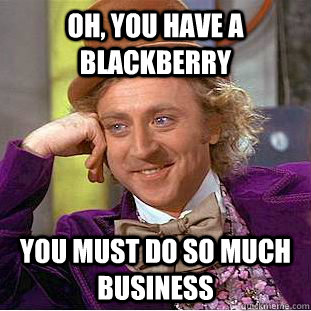
Once the iPhone wave began, the tech and mobile phone industries shifted with it. There were already some pretty big, addictive websites buried into our lives by then, but they were mainly consigned to laptop or desktop environments. There was a physical gap between Big Tech and people which was about to be closed forever.
The app culture that Apple kicked off between 2007 and 2009 was ripping up the rulebooks and allowing access to web services like never before. Suddenly you could check your Facebook from anywhere, just as some ex-Yahoo dudes decided to create a data-based messaging service (WhatsApp) to replace expensive SMS with even cheaper text messages, as long as you were on the WiFi at least. Soon enough, everyone started building apps too. My company included; we subsequently occupied a top-10 downloaded app in the UK marketplace for several years. Our website, like lots of addictive websites, started to focus on keeping you on its app, something that would change the course of human behaviour.
It sounds like some tale of yore, but before 2007, most people did not stare at their mobile phone for hours at a time. Hard to believe these days.
Phones and laptops were created to make our lives easier, yet most of us feel more distracted than ever. Between notifications, doom-scrolling and the pressure to stay constantly available, it can be tough if not impossible to switch off or focus properly any more.
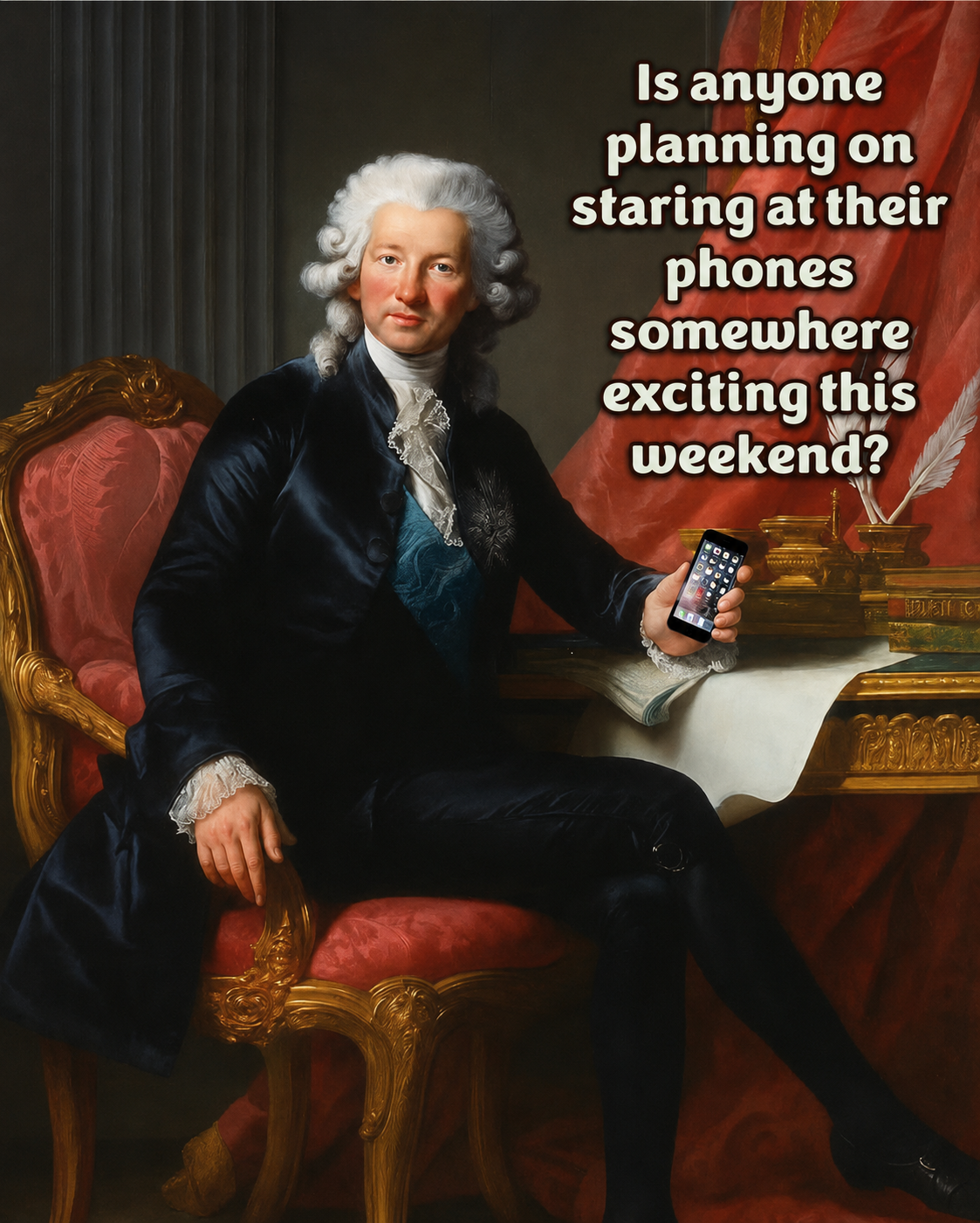
A long time ago now, maybe 9 or 10 years ago, I had a realisation that I was spending too much time on my mobile phone. Perhaps because I’d done it for many years at this point I was getting bored of it. Perhaps I just started to get irritated by friends and family staring into their phones instead of actually interacting with me. I don’t know for sure, but as usual with things like this I began to ask: wait, am I like that? Am I part of the problem?
And of course the answer was 100% yes. I was a hypocrite. I was finally annoyed with a behaviour that I myself had been fully guilty of committing. I was addicted to my mobile phone, and as we all know these days, the first step to beating any kind of addiction is acceptance. Not acceptance in the sense that I was happy about it, or that it was going to be an easy fix, but I’d finally accepted that it was a problem, and I was keen to see it for what it is.
I knew it wasn’t just me that this affected, and even back then I was wondering how I could regain control of my mobile and share what I’d done for anyone else who felt the same. It’s admittedly taken me a long time to finally turn this draft into a proper article, but in the time that it’s collected dust, lots of other bloggers, tech writers, journalists, professionals and doctors from all over the place have started to have the same realisations and published their own articles suggesting how you, too, can reclaim your attention from your mobile phone.
Despite How Interesting being a more technically focussed blog, I decided to place a foot into digital wellbeing for a change and share some ways I’ve been able to reclaim control of my attention. I figured that some of this stuff may be useful to others, and the results are this two-part essay.
Here in Part I, we explore how our devices hijack attention and what that constant noise does to our brains. Over in Part II, there are some practical ways to take control again, from simple boundaries to a more mindful and deliberate use of your technology. For those who want to continue reading, I’ll include some of the other articles I read over the years too.
The Constant Ping#
🔔 You unlock your phone to check the weather.
🔔 Thirty seconds later you have read a message, skimmed a meme, noticed a calendar alert and almost forgotten why you reached for it.
“It is fine, you tell yourself, just noise…”
🔔 Then another ping…

Most of us are now well within the territory where our devices talk more than we do. Every app, widget and smart thing wants a piece of our attention. Only a bit, but it’s all of them.
The result is what The Verge called Notification Hell: a world where even system menus try to sell you some garbage, and “helpful” assistants keep interrupting you with guesses about what you might want to do next. How many times have you opened an app and it immediately asked for a review before you’d even used it? As a tiny and perhaps juvenile protest, these cheerily get 1/5 stars from me every time.
One of the first things an app will do when you install it is ask for permission to send notifications. Many of these apps don’t accept no for an answer, so you have to go back into settings to disable them again. Some badger you each time you open them to re-enable the notifications you’ve already turned off (glares at Snapchat, X, Reddit etc).
We can end up living inside a never-ending game of whack-a-mole, with alerts arriving from every direction while we try to swat them away. Some are useful, such as your parcel arriving; most are not, such as someone liking a photo from your Corfu ‘06 holiday album. Either way, the cost of switching attention adds up far faster than we realise.
According to researcher Sophie Leroy, even small interruptions break the mental thread we rely on to stay focused. A quick glance at a message forces the brain to rebuild context afterwards. Do this tens of times per day and it is no surprise that we feel busy without actually achieving anything. For a deeper dive into this switching cost, see The Guardian on notifications and concentration.
If this all sounds uncomfortably familiar, you are in good company. From healthcare workers drowning in Microsoft Teams alerts, to anyone who has ever muted a busy WhatsApp group only for the app to light up with another one minutes later, we are living through the same experiment inside tiny pieces of fragmented attention. The question isn’t whether we’re distracted, but how much control we are willing to take back.
In order to tackle any problem, one must first try to understand it. Learning to spot the patterns offers the opportunity to act before the habits become too engrained.
Let’s dig into what is happening in our heads when we just check one more notification, and why it is so hard to stop…
The Science of Distraction#
It’s easy to blame ourselves for being glued to little screens, but distraction is baked into how our brains and devices interact. Every ping, pop-up and badge is engineered to trigger a tiny burst of dopamine, the brain’s reward signal that says something new just happened. Novelty feels good, even if it’s meaningless.
Scientists and researchers call this the variable-reward effect. Like a slot machine, our phones occasionally deliver a genuine reward such as a message from a friend, a delivery update, or an interesting post. Our brains quickly learn to keep checking in case the next refresh brings another hit. Even the little red numbers that appear on app icons are engineered to be irresistible. You can blame Steve Jobs for that one, and it’s only a tiny part of the game.
The real drag is the context-switching cost. Each diversion leaves a trace of the previous task behind, and your mind has to grind back up to speed when you return. Multiply that by hundreds of micro-interruptions a day and it becomes clear why it is harder than ever to concentrate for long stretches. Some doctors and psychologists (such as Dr Sophie Leroy) refer to this lingering effect that follows such interruptions as Attention Residue. Personally I call it digital harassment… but whatever you call it, the result is the same: more friction, less focus.
Self-control helps, but it is a finite resource. The more often we resist, the more mentally tired we become, until it is easier to give in and check again. None of this means we are weak or lazy. It means the dice are loaded. Whole teams of behavioural scientists optimise products to keep us engaged, while the tools designed to help us work, socialise and relax are also tuned to capture every spare second of our attention. Not a single one of them has heard of, or cares about, collective responsibility. It’s contrary to their growth plans and views of their shareholder overlords. It’s up to you to take action.
It’s also worth knowing that a growing share of what you’re scrolling past isn’t even being posted by humans. TechRadar’s Matt Evans wrote a sobering piece after watching a viral video of an industrial-scale social media bot farm: racks of screenless phones, pumping out fake engagement at scale. Knowing that the outrage you’re reacting to may well have been manufactured by a server room somewhere doesn’t really make it less infuriating, but it does help to keep things in perspective. Engagement is half the battle.
Related, but one of my other pet-hates is clickbait. Often targeted via tracking, low-quality and incomplete garbage articles with sensationalist headlines with one objective - hooking a user to see embedded adverts or be tracked with abusive cookies that proceed to chase you around the internet. Learn to spot clickbait and look down on it. Ignore it. If you’re a user of a news app and one particular vendor keeps showing you clickbait, remove them from the list. Don’t accept all cookies by default; accept only essential cookies, or whatever the minimum is.
So if you have ever found yourself unlocking your phone without realising you picked it up, you are not alone. Your brain is simply doing what it has been trained to do. One of the active ways I’ve tackled this one myself is to ask myself “what am I reaching for my phone for?”. If the answer is “dunno” then I stop myself. Then I realise I don’t actually care. I don’t need to look at my phone at all right now. The spell begins to unravel… just enough for a wink of clarity.
Next, let’s zoom out from the science to the bigger picture: how the background noise of modern tech has changed the way we see work, relationships and even the passage of time.
The Bigger Picture#
It is tempting to frame distraction as a personal failing. Perhaps we just need to be more disciplined, or find the right productivity app. The truth is that this is a cultural shift on a scale we have not faced before.
In a piece by Tom on Another Angry Voice, he describes how years of social media use rewired his attention, mood, and even his sense of connection to the real world. It is a feeling many of us recognise, even if we can’t quite describe it. The modern world runs on constant data input, and silence can feel strange or even uncomfortable to some.
Sean Morley’s Who Remembers Attention Spans? in Now Then Magazine puts it well too: a lot of what we frame as a personal attention problem is really a symptom of an information environment that has been deliberately engineered to be exhausting. We didn’t choose this; it was built around us, slowly, while we were busy looking at it.
We have seen big leaps in how people consume information before. The printing press put knowledge in everyone’s hands. Radio and television reshaped daily life and culture. The difference here is that those changes unfolded across generations, while social media reached a far greater scale within just a few years.
That speed is key. The faster something spreads, the less time there is for people to adapt. Children now learn to swipe before they can read. Many adults rely on algorithmic feeds for news, social contact, and sometimes even a sense of identity. These tools have made information accessible to everyone, but at the cost of scattering attention in every direction all at once.
There is also a social cost. When everyone is permanently half-present, conversations fragment and downtime diminishes. Work stretches into personal hours, and even into our beds. Rest feels less like a pause and more like a window to catch up. Do you ever sit down for 10 minutes and then immediately feel guilty that you could be doing something productive?
It adds up to the sense that life is happening in short bursts rather than clear moments. More than once I have felt like I’ve got a lot done in a morning, just to realise all I’ve really done is clear some emails and notifications. Worthless time-sapping garbage.
As one summary of notification overload put it, we are switching between different worlds and never fully in the moment. When you are never quite present, you stop properly listening, stop properly laughing, and the moments that are actually worth having slip past while you were half-checking something else.
The good news is that awareness is growing. From schools and gigs introducing phone-free policies to individuals experimenting with digital detoxes, people are questioning the cost of constant connection.
Children, schools and the next generation#
If any of the above lands uncomfortably for adults, it’s worth pausing on what this looks like for the people who’ve never known a world without it.
Plenty of schools, parents and governments are now openly questioning whether the deal we’ve struck with the smartphone is one we’d want our children to inherit. The Guardian has argued the case for banning smartphones from schools entirely, and a growing number of schools across the UK and elsewhere are doing exactly that. The early reports are striking: classrooms quieter, breaktimes louder, kids actually talking to each other again.
There’s a knock-on effect at home, too. The BBC has written about phubbing, the slightly ungainly term for snubbing the person in front of you in favour of your phone. Most of us have done it; quite a lot of us have had it done to us. Children pick it up faster than anyone, because they learn what attention looks like by watching us. If we model “half-present, half-scrolling” at the dinner table, they’ll do it straight back.
None of this is a moral lecture. I’m not naturally drawn to the position that kids today have it worse than we did, because every generation says some version of that and most of them turn out to be wrong. But the specific tool has changed, and the rate at which it’s changing is unprecedented. That’s worth taking seriously, especially if you’re around younger people.
Signs You Are Losing the Balance#

Most of us like to think we use our devices sensibly and acceptably. We tell ourselves we could stop whenever we want, and that we are in control. Yet small signs will give the game away.
- You pick up your phone to reply to a message and forget why you picked it up.
- You check the time, then realise you have checked three other apps before putting it down.
- You take a photo of something nice, then spend longer editing and posting it than you did enjoying the moment.
- You flip between home screens for no reason.
These lapses don’t mean you have a problem, or that you’re to blame. They show how good technology has become at stealing focus. Your focus has become a gold rush to technology companies, and they’re digging hard. Over time, even the smallest interruptions start to feel normal. Great news for them. Not so much for you.
Other signs that your digital habits might be taking over more than you would like:
- Phantom notifications: feeling your phone buzz when it has not.
- Split attention: half-listening in meetings, conversations or films while doom-scrolling something unrelated.
- Sleep issues: checking messages and emails just before bed, or reaching for the phone the moment you wake.
- Restless downtime: finding it hard to do nothing, or to sit quietly without a screen nearby.
- Reduced patience: struggling with tasks that do not give instant feedback or reward.
None of these on their own is a crisis, but together they paint a familiar picture. You are not bored, you are overstimulated. The brain gets so used to short bursts of novelty that calm starts to feel uncomfortable. When calm feels wrong, the cycle continues.
If you suspect you might have wandered a little further down this road than you’d like, Internet & Technology Addicts Anonymous has a short self-assessment questionnaire on phone addiction which is worth a calm five minutes. Nobody’s going to grade you on it; it’s just useful data.
But don’t panic!#
Awareness is the first step back to balance. In Part II we shift from root cause to fix: practical ways to take control of digital life without going completely off-grid.
All references and further reading for the whole essay are collected at the end of Part II.